Cannabinoid Receptor
Cannabinoid Receptor
Cannabinoid receptors are currently classified into three groups: central (CB1), peripheral (CB2) and GPR55, all of which are G-protein-coupled. CB1 receptors are primarily located at central and peripheral nerve terminals. CB2 receptors are predominantly expressed in non-neuronal tissues, particularly immune cells, where they modulate cytokine release and cell migration. Recent reports have suggested that CB2 receptors may also be expressed in the CNS. GPR55 receptors are non-CB1/CB2 receptors that exhibit affinity for endogenous, plant and synthetic cannabinoids. Endogenous ligands for cannabinoid receptors have been discovered, including anandamide and 2-arachidonylglycerol.
Cannabinoid Receptor Isoform Specific Products
All Product Categories
-
Cannabinoid Receptor Inhibitors
(37)
View all products
-
Cannabinoid Receptor Agonists
(136)
View all products
-
Cannabinoid Receptor Antagonists
(75)
View all products
-
Cannabinoid Receptor Activators
(15)
View all products
-
Cannabinoid Receptor Modulators
(24)
View all products
-
Cannabinoid Receptor Chemical
(1)
View all products
-
Cannabinoid Receptor Inducer
(1)
View all products
-
Cannabinoid Receptor Degrader
(1)
View all products
-
Cannabinoid Receptor Controls
(2)
View all products
-
Cannabinoid Receptor Ligands
(13)
View all products
-
Cannabinoid Receptor Related Products (442)
Related Products (442)

-
Antibodies (1)
-
Cannabinoid Receptor Isoform Comparison
-
Pregnenolone monosulfate
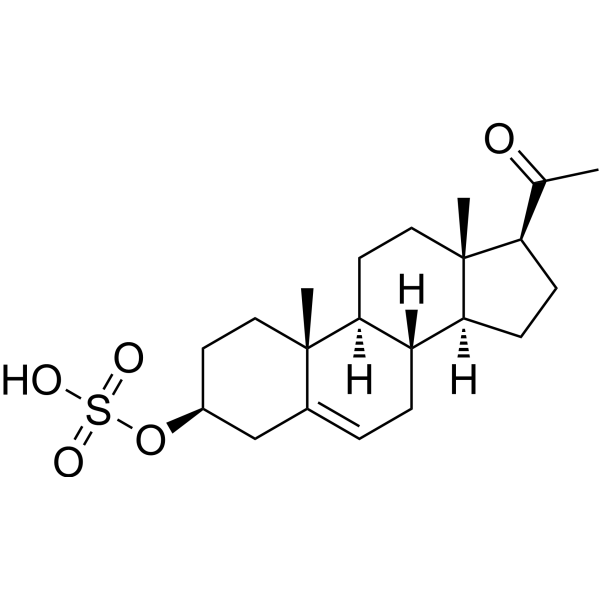 0 ImagesSynonyms: 3β-Hydroxy-5-pregnen-20-one monosulfatePregnenolone monosulfate (3β-Hydroxy-5-pregnen-20-one monosulfate) is a powerful neurosteroid, the main precursor of various steroid hormones including steroid ketones. Pregnenolone monosulfate acts as a signaling-specific inhibitor of cannabinoid CB1 receptor, inhibits the effects of tetrahydrocannabinol (THC) that are mediated by the CB1 receptors. Pregnenolone monosulfate can protect the brain from cannabis intoxication. Pregnenolone monosulfate is also a TRPM3 channel activator, and also can weakly activate TRPM1 channels.
-
Leelamine
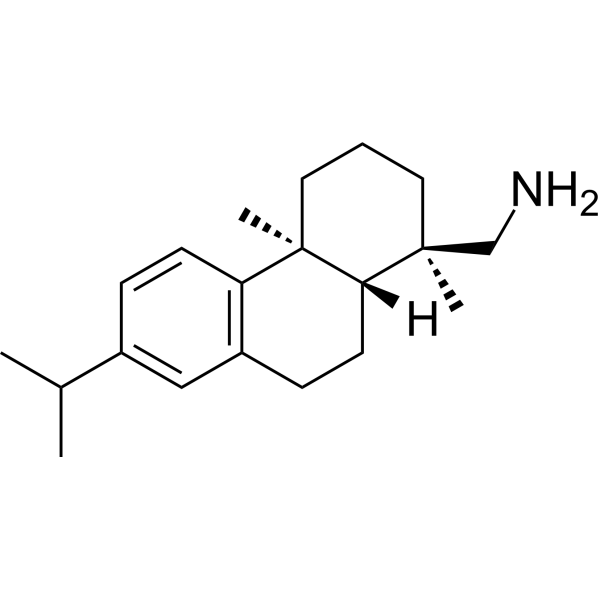 0 ImagesCat. No.: HY-W005629CAS No.: 1446-61-3Leelamine is an orally active pyruvate dehydrogenase kinase (PDK) inhibitor with an IC50 value of 9.5 μM, showing a blood glucose lowering effect in the diabetic mouse. Leelamine is also a weak agonist of cannabinoid receptors CB1 and CB2. Leelamine decreases mitotic activity, prostate-specific antigen expression and induces Apoptosis to cell death in cancer cells.
-
Olorinab
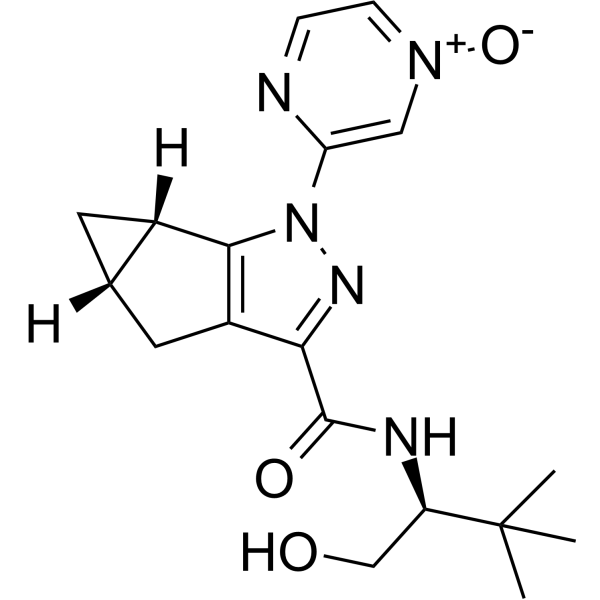 0 ImagesSynonyms: APD 371Olorinab (APD 371) is a highly potent, selective and fully efficacious cannabinoid receptor type 2 (CB2) agonist, with an EC50 of 6.2 nM for hCB2.
-
Linoleoyl ethanolamide
 0 ImagesSynonyms: Linoleic acid monoethanolamideLinoleoyl ethanolamide (Linoleic acid monoethanolamide) is classified as a fatty acid ethanolamide. Linoleoyl ethanolamide only weakly binds G-protein-coupled cannabinoid receptors of type-1(CB1)and CB2 receptors, and inhibits the binding of [3H]CP-55,940 with Kis of 10 and 25 μM, respectively. Linoleoyl ethanolamide is 4-fold less potent than anandamide at causing catalepsy in mice and it does not prolong sleep time.
-
Otenabant
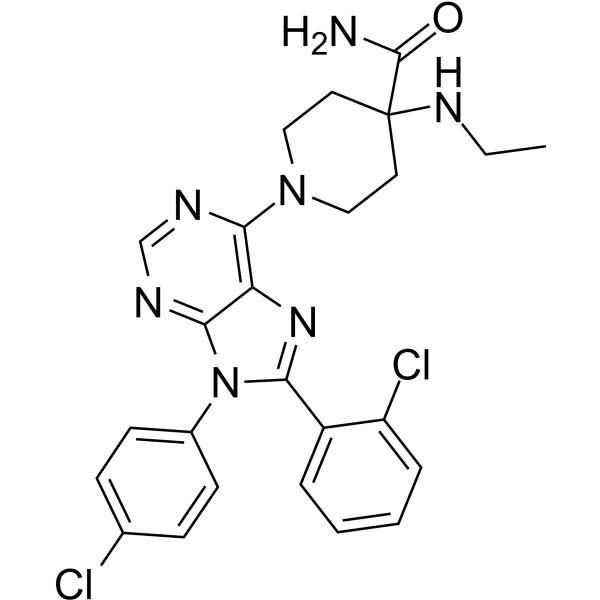 0 ImagesSynonyms: CP-945598Otenabant is a potent and selective cannabinoid receptor CB1 antagonist with Ki of 0.7 nM, exhibits 10,000-fold greater selectivity against human CB2 receptor.
-
Tetrahydromagnolol
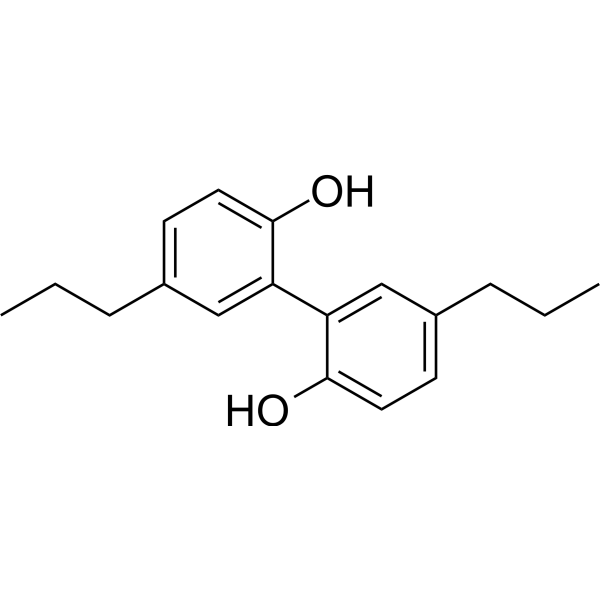 0 ImagesSynonyms: MagnolignanTetrahydromagnolol (Magnolignan), the main metabolite of Magnolol, is a potent and selective cannabinoidCB2 receptor agonist (EC50 =170 nM) and GPR55 antagonist. The Ki of Tetrahydromagnolol for CB2 is 416 nM, 20-fold higher than for the CB1 receptor. Magnolol shows antifungal, anti-inflammatory and analgesic effects.
-
GW-405833
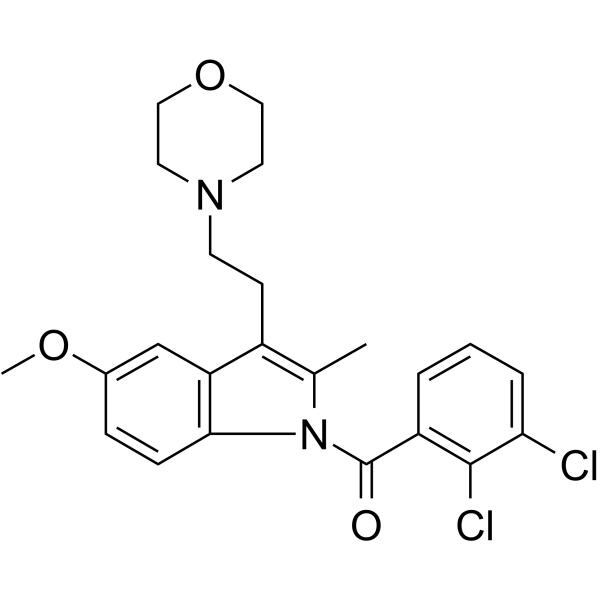 0 ImagesSynonyms: L768242GW-405833 (L768242) is a potent, selective cannabinoid receptor 2 (CB2) agonist. GW405833 has EC50 and Ki values of 0.65 nM and 3.92 nM for CB2, and EC50 and Ki values of 16.1 μM and 4772 nM for CB1. GW-405833 also exhibits non-competitive CB1 antagonist, exerting its analgesic and and anti-inflammatory effect through a CB1 receptor (rather than CB2) dependent mechanism. GW-405833 can significantly inhibit the production of cAMP stimulated by Forskolin (HY-15371). GW405833 inhibits glycolysis by down-regulating HIF-1α, thereby alleviating acute liver failure (ALF).
-
2-Linoleoyl glycerol
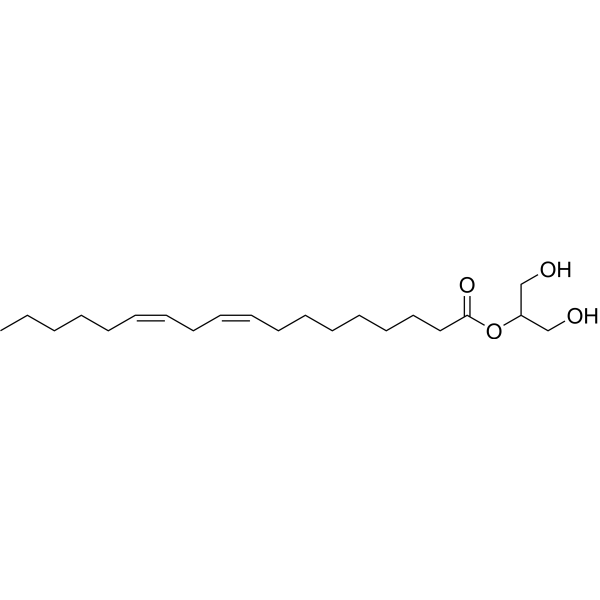 0 ImagesSynonyms: 2-Monolinolein; 2-Monolinoleoylglycerol
-
Pregnenolone (Standard)
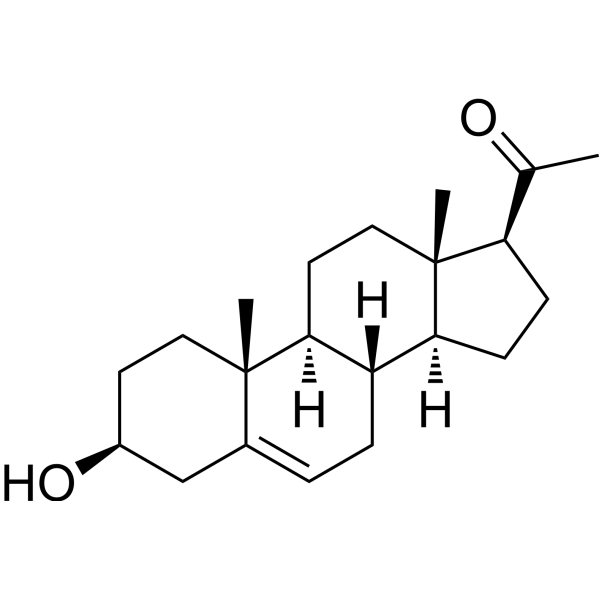 0 ImagesSynonyms: 3β-Hydroxy-5-pregnen-20-one (Standard)Pregnenolone (Standard) is the analytical standard of Pregnenolone. This product is intended for research and analytical applications. Pregnenolone (3β-Hydroxy-5-pregnen-20-one) is a powerful neurosteroid, the main precursor of various steroid hormones including steroid ketones. Pregnenolone acts as a signaling-specific inhibitor of cannabinoid CB1 receptor, inhibits the effects of tetrahydrocannabinol (THC) that are mediated by the CB1 receptors. Pregnenolone can protect the brain from cannabis intoxication. Pregnenolone is also a TRPM3 channel activator, and also can weakly activate TRPM1 channels.
-
AM404
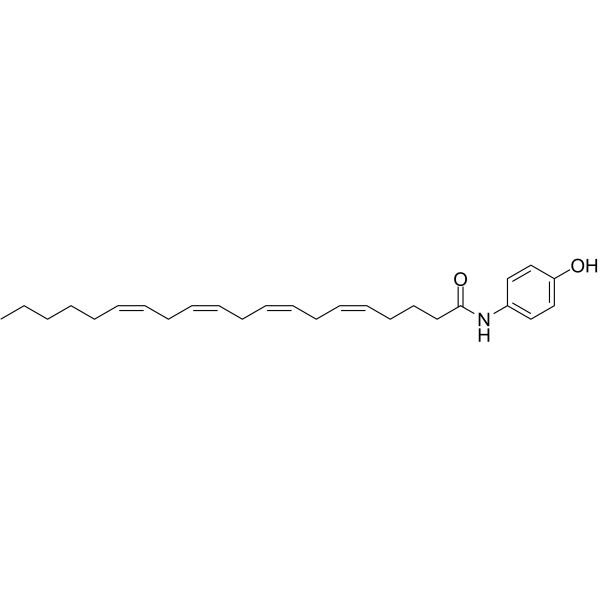 0 ImagesAM404, an inhibitor of endocannabinoid reuptake, blocks anandamide transport with IC50 values in the low micromolar range. AM404 is able to relax rat isolated hepatic arteries contracted with Phenylephrine, with a pEC50 value of 7.4 (corresponding to an EC50 of 0.04 μM). Neuroprotective Effect.
-
CB1 antagonist 2
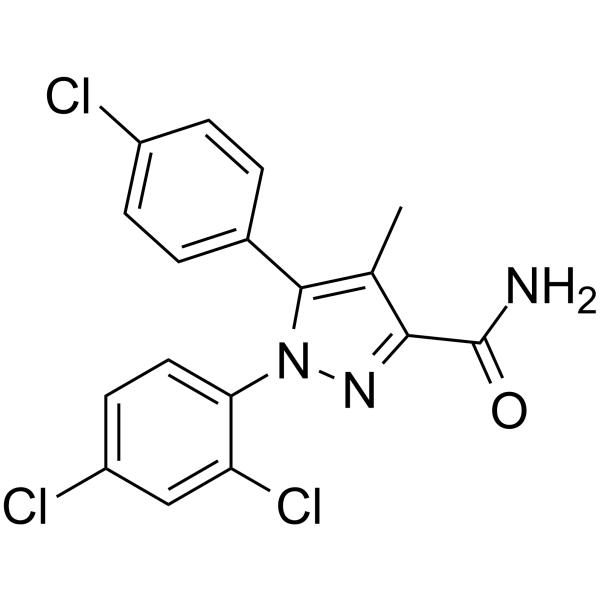 0 ImagesSynonyms: AM4113CB1 antagonist 2 (AM4113) is an orally active cannabinoid receptor type 1 (CB1R) antagonist. CB1 antagonist 2 suppresses appetite, reduces body weight, and blocks addictive behaviors such as heroin addiction, without causing adverse effects like nausea and depression that are associated with traditional CB1 inverse agonists. CB1 antagonist 2 can be used in studies related to obesity and opioid addiction.
-
β-Caryophyllene (Standard)
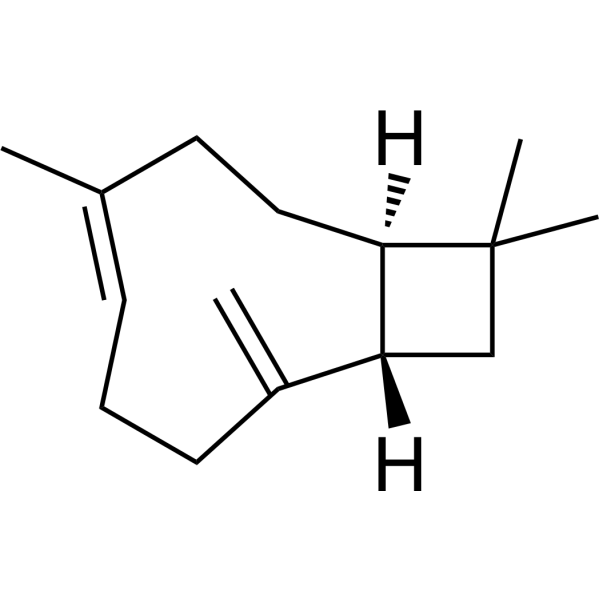 0 ImagesSynonyms: (-)-(E)-Caryophyllene(Standard); (−)-β-caryophyllene(Standard); (−)-trans-Caryophyllene (Standard)β-Caryophyllene (Standard) is the analytical standard of β-Caryophyllene. This product is intended for research and analytical applications. β-Caryophyllene is a CB2 receptor agonist.
-
CB1 agonist 1
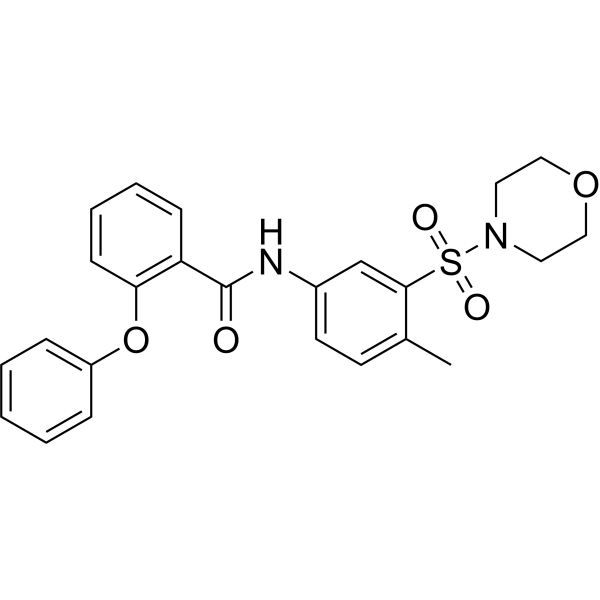 0 ImagesCB1 agonist 1 (compound 22) is an agonist of CB1. CB1 agonist 1 shows affinity to CB1 receptor with an pIC50 value of 5.7. CB1 agonist 1 can be used for the research of brain disorders.

-
Leelamine hydrochloride
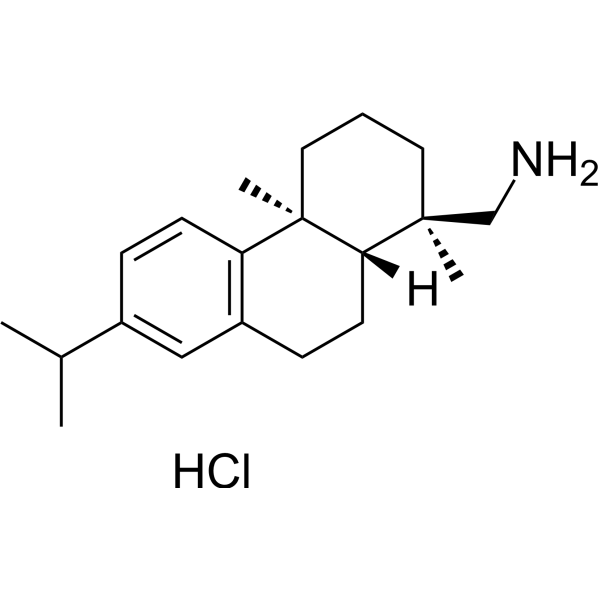 0 ImagesLeelamine hydrochloride is an orally active weakly basic amine that inhibits NPC1 and the androgen receptor AR-V7, and acts as a cannabinoid receptor agonist. Leelamine hydrochloride also functions as a lysosome affinity agent that blocks endocytosis, disrupts autophagic flux and cholesterol transport, thereby altering the RTK-AKT/STAT/MAPK signaling cascade. Leelamine hydrochloride induces cancer cell death and autophagosome accumulation, and can be used in research related to melanoma, castration-resistant prostate cancer and breast cancer.